AMR Project for Ukraine
An AI-powered national health infrastructure project designed to build antimicrobial resistance (AMR) surveillance and response capacity in a healthcare environment severely disrupted by war. The project aims to standardize fragmented hospital, laboratory, and regional data and establish a sustainable foundation for real-time AMR monitoring, laboratory capacity strengthening, antimicrobial stewardship, and post-war health system recovery through AI and ontology-driven infrastructure.
[ TIMELINE ]
In Progress
[ CLIENT ]
WHO GLASS & こうせいろうどうしょう
[ INDUSTRY ]
Government
Medical
[ CHALLENGE ]
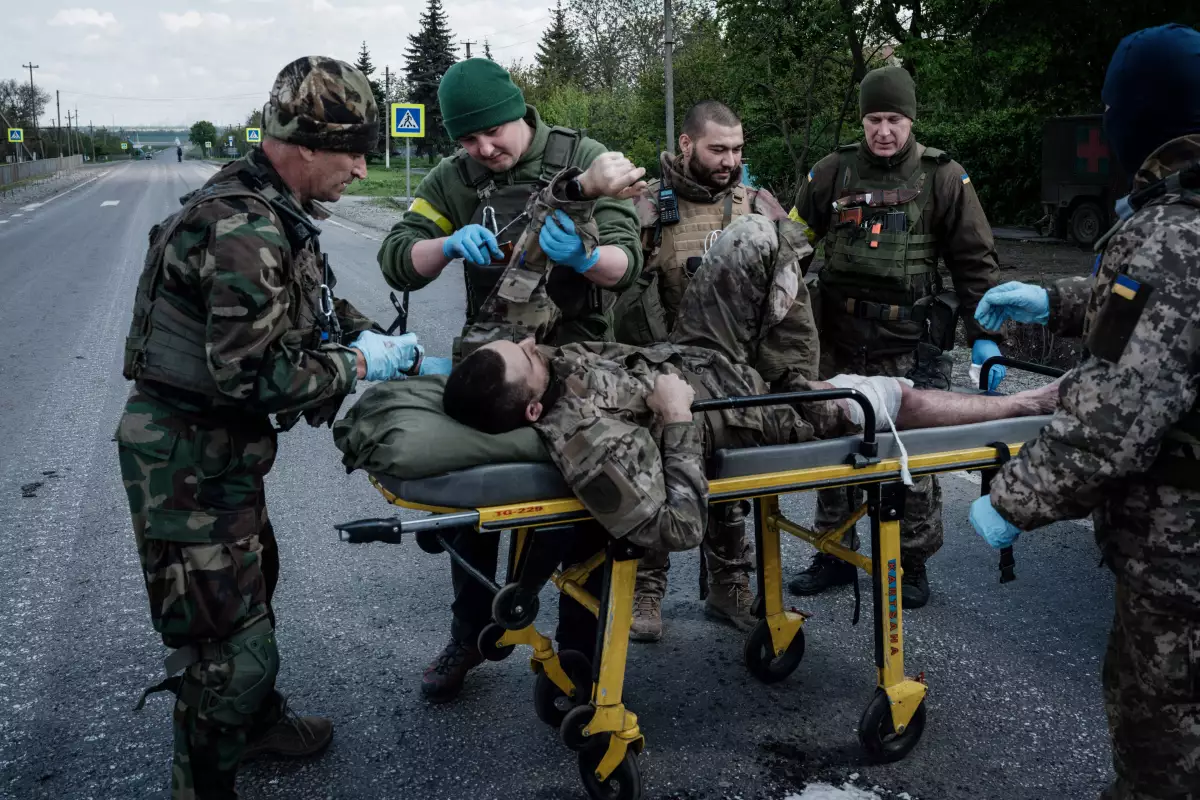
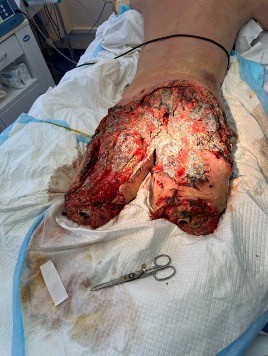
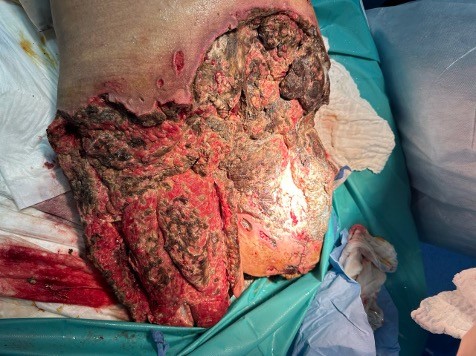
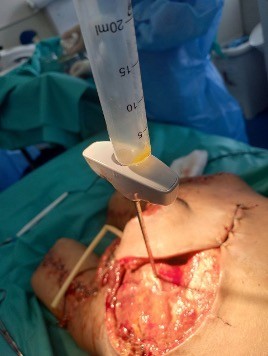
Ukraine is facing not only a shortage of medical resources due to war, but a deeper structural weakening of the systems required to detect, monitor, and respond to infectious disease threats. Hospitals and laboratories have been physically damaged, clinical and technical personnel have been displaced or reduced, and supply chain disruptions continue to affect diagnostic equipment, reagents, and laboratory operations. In this environment, wound infections, post-surgical infections, and community-acquired infections can rise rapidly, while antimicrobials are often used more frequently for prophylactic or empirical purposes. Together, these conditions create a high-risk environment for the emergence and spread of antimicrobial resistance.
At the same time, the country’s ability to monitor AMR at a national level remains severely constrained by fragmented and inconsistent data systems. Different hospitals and laboratories use different naming conventions for organisms, antimicrobials, AST results, diagnoses, and specimen types. Many institutions still rely on paper-based records, spreadsheets, or unstructured reports. Even within a single institution, data structures may differ across departments, and there is often no shared semantic standard across hospitals, laboratories, and regional public health units. As a result, even when data is collected, it is extremely difficult to aggregate, compare, and interpret meaningfully at a national scale.
Laboratory capacity and data quality also vary significantly across institutions. Some facilities may have relatively advanced microbiology workflows and antimicrobial susceptibility testing capabilities, while others may face major limitations in equipment, protocols, technical expertise, and quality control. This results in uneven data reliability and reproducibility across the country, which directly undermines the trustworthiness of any centralized surveillance effort.
A further challenge is that the most important data sources are often disconnected from one another. Microbiology and AST data may exist, but they are frequently isolated from prescription records and not consistently linked to diagnostic context. This makes it difficult to understand not only what resistance is occurring, but how antimicrobial use patterns are associated with that resistance in real clinical settings. In other words, the system cannot easily move beyond retrospective resistance counts toward operational intelligence that supports clinical decision-making and public health intervention.
Perhaps most critically, many existing surveillance approaches in low-resource or crisis settings are not designed for timely action. Data collection is often retrospective, manual, and disconnected from the feedback loops required for policy, stewardship, procurement, infection control, and laboratory improvement. Even when resistance data exists, it is rarely transformed into standardized, comparable, and actionable intelligence quickly enough to influence real-world decisions.
In this sense, the AMR challenge in Ukraine is not simply a matter of increasing infection burden. It is a systemic problem in which healthcare delivery, laboratory operations, data infrastructure, and public health response are all under simultaneous stress. The core challenge is therefore not just to build software, but to design a national AMR surveillance foundation that can function during wartime, support post-conflict recovery, and remain sustainable over the long term.


[ SOLUTION ]
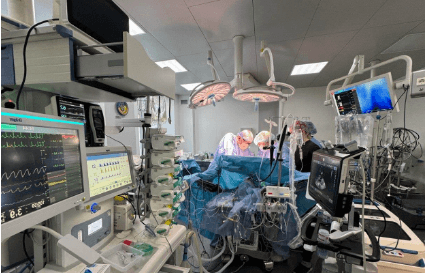
The solution is not merely to build another reporting system, but to create an integrated national AMR intelligence infrastructure that can transform fragmented healthcare and laboratory data into interpretable, interoperable, and actionable information. Our approach is centered on standardizing heterogeneous data across hospitals, laboratories, and regions, then connecting those data through an ontology-driven semantic layer that makes national-scale surveillance and analytics possible.
At the core of the system is the normalization of microbiology results, antimicrobial susceptibility testing (AST), prescription records, diagnostic information, and specimen data into a shared data model supported by a domain-specific ontology. This goes far beyond simple code mapping. It includes harmonizing different naming conventions, abbreviations, laboratory reporting styles, and unstructured clinical or laboratory expressions so that data from different institutions can be understood within a common semantic framework. This semantic foundation is what enables meaningful comparison across institutions, regions, and time periods, and it is essential for both reliable analytics and trustworthy AI support.
The project also incorporates a flexible, multi-path data ingestion strategy designed for real-world constraints. In a war-affected environment, not all institutions can provide the same level of digital integration. Where structured interfaces are available, the system can ingest electronic data directly. Where they are not, the platform can absorb report-based and semi-structured inputs and transform them into standardized formats. This pragmatic architecture is essential for building national coverage despite uneven infrastructure maturity across facilities and regions.
Beyond data collection, the system is designed as an operational AMR intelligence layer for public health action. It enables monitoring of resistance trends by institution, region, time period, and specimen type; supports early detection of unusual signals or emerging resistance patterns; and allows analysis of how antimicrobial usage correlates with resistance dynamics. This means the platform is not limited to producing retrospective statistics. It is built to support antimicrobial stewardship, laboratory improvement, infection prevention and control measures, procurement strategy, and broader public health planning.
Strengthening laboratory capacity and improving data quality are also built into the project’s design. AMR surveillance is only as strong as the quality and interpretability of the underlying laboratory data. For that reason, the platform is structured not only to collect and centralize results, but also to support more consistent interpretation, reduce variation across reporting practices, and create the foundation for feedback mechanisms that improve laboratory performance over time. In this way, the surveillance system becomes more reliable as the national ecosystem matures.
Technically, the project is built on the convergence of AI, ontology, and operational health infrastructure. AI supports the transformation of unstructured or semi-structured data, semantic normalization, pattern detection, summarization, and generation of actionable insights. The ontology layer provides the semantic backbone that aligns hospitals, laboratories, and public health entities around shared meaning. The operational infrastructure ensures that these capabilities can function as a stable national system rather than as isolated analytics tools or dashboards. Together, this creates a continuously evolving AMR surveillance platform rather than a static reporting application.
Ultimately, the AMR Project for Ukraine is both an immediate crisis-response system and a long-term foundation for national recovery. It is designed not only to address wartime surveillance gaps, but also to establish the infrastructure for resilient infectious disease management, stronger antimicrobial stewardship, and future regional and global health security collaboration. In that sense, the project is not simply about software deployment—it is about designing resilience into the future of a national health system.
[ RESULTS ]
In Progress
Now